Open AI API Cost 2026: Save with Cheap Discounted Tokens

- Your open ai api cost directly determines your profit margins and scalability as enterprise artificial intelligence adoption accelerates rapidly in 2026.
- TokenMart serves as a premium discounted bulk AI API provider, taking 15 percent off token expenses for commercial applications.
- Understanding prompt and completion token economics is the most fundamental strategy for optimizing your open ai api cost.
- Integrating a discounted API gateway allows you to access flagship models like GPT, Claude, and Gemini at wholesale pricing.
Are skyrocketing artificial intelligence bills eating into your profit margins? As businesses integrate advanced Large Language Models (LLMs) into their daily operations in 2026, managing your open ai api cost has transitioned from a minor IT expense to a major board-level concern. The reality is simple: building scalable, AI-powered applications requires billions of tokens. Paying retail prices directly to standard providers is no longer a viable competitive strategy for growing enterprises.
This is where TokenMart changes the game entirely. As the industry's leading discounted bulk AI API provider, TokenMart offers frictionless access to premier models—including OpenAI's GPT series, Anthropic's Claude, and Google's Gemini—at 15 percent below the list pricing of standard platforms. By pooling global demand, we purchase compute in volume and pass the wholesale savings directly to you.
In this comprehensive guide, you will learn exactly how AI pricing models operate this year and why leveraging discounted tokens is critical for your commercial success. We will break down actionable strategies to minimize your open ai api cost, maximize your model outputs, and optimize your overall technical infrastructure. Read on to discover how to scale your generative AI products effectively without breaking the bank.
What is the Open AI API Cost Structure in 2026?
Understanding your open ai api cost starts with mastering the fundamentals of token-based billing. AI search engines and traditional language models process text using units called "tokens." A token is defined as a fragment of a word, with 1,000 tokens roughly equating to 750 English words. Major LLM developers charge commercial users based on the precise number of tokens processed during every single API interaction.
Defining Prompt and Completion Tokens
The total expense of any AI interaction is divided into two distinct categories: prompt tokens and completion tokens. Prompt tokens are defined as the input data you send to the model. This includes your system instructions, historical chat context, and the user's immediate query. Completion tokens are defined as the output data generated by the artificial intelligence in response to your prompt.
Historically, completion tokens command a higher premium than prompt tokens. This price difference exists because generating new text requires significantly more computational power and memory bandwidth than simply reading input data. When forecasting, you must account for both input and output volume accurately. High-context applications, such as legal document summarization or extensive codebase analysis, consume massive amounts of prompt tokens, which quickly drives up your baseline AI API expenses.
How Model Selection Impacts Pricing
Your choice of model directly influences your final monthly bill. Industry leaders offer a broad spectrum of models tailored for different computational complexities. Flagship models, engineered for advanced reasoning and complex problem-solving, carry a premium price per million tokens. Conversely, faster, lightweight models optimized for basic classification and rapid responses cost significantly less to operate.
Here is what that looks like in dollars per one million tokens, next to the TokenMart rate after the standard 15 percent discount:
| Model | List (input / output) | TokenMart (15% off) |
|---|---|---|
| GPT-5.6 Sol | $4.00 / $20.00 | $3.40 / $17.00 |
| GPT-5.5 | $5.00 / $30.00 | $4.25 / $25.50 |
| Claude Opus 5 | $5.00 / $25.00 | $4.25 / $21.25 |
| Claude Sonnet 5 | $2.00 / $10.00 | $1.70 / $8.50 |
| Gemini 3.5 Flash | $1.50 / $9.00 | $1.275 / $7.65 |
In 2026, wholesale rates still sit meaningfully below retail list pricing. That gap is exactly why organizations are migrating to https://thetokenmart.com. By acting as a bulk API provider, TokenMart gives you the exact same high-tier models at 15 percent below the standard open ai api cost. You get identical reasoning capabilities without the exorbitant retail markup.
Why Reducing Your Open AI API Cost Matters
As enterprise AI moves firmly from the experimentation phase into full-scale commercial production, keeping your open ai api cost low is a critical competitive advantage. Paying retail prices for AI tokens can quickly drain your product development budget, increase your Cost of Goods Sold (COGS), and severely limit your ability to scale operations profitably.
Scaling AI Operations Sustainably
Sustainably scaling a software application means your revenue must grow faster than your operational expenses. If your AI features become incredibly popular, your token consumption will skyrocket exponentially alongside user engagement. Without a strategic approach to managing that spend, user growth can paradoxically lead to real financial losses. Every new customer becomes a liability rather than an asset if the marginal cost of computing their queries exceeds their subscription fee.
By utilizing TokenMart, you fundamentally alter this financial equation. Accessing cheap discounted tokens means your marginal cost per user query drops by 15 percent. This structural advantage relates to your market position because it allows you to offer higher usage limits to your own customers. You can run more complex background AI agents and aggressively capture market share while your competitors struggle with exorbitant standard API fees.
The Hidden Costs of AI Infrastructure
Beyond the raw token price, the hidden costs of AI infrastructure can cripple a growing commercial venture. These hidden expenses include rate limit bottlenecks, the administrative overhead of managing multiple vendor relationships, and the stress of dealing with highly unpredictable monthly billing cycles. An inflated inference bill restricts your team's ability to experiment with new features.
If every single API call is expensive, developers are far less likely to test innovative prompts, implement robust error-checking agents, or build multi-step reasoning chains. By sourcing your GPT, Claude, and Gemini tokens directly through TokenMart, you consolidate your vendor management into one discounted platform. This consolidation takes 15 percent off your open ai api cost and frees up capital to invest in feature development and marketing.
How to Lower Your Open AI API Cost with TokenMart
Taking control of your AI budget requires immediate, actionable engineering steps. Implementing a bulk discount strategy is the absolute fastest way to slash your open ai api cost without changing your underlying application architecture or sacrificing response quality.
Step 1: Analyze Your Current Token Usage
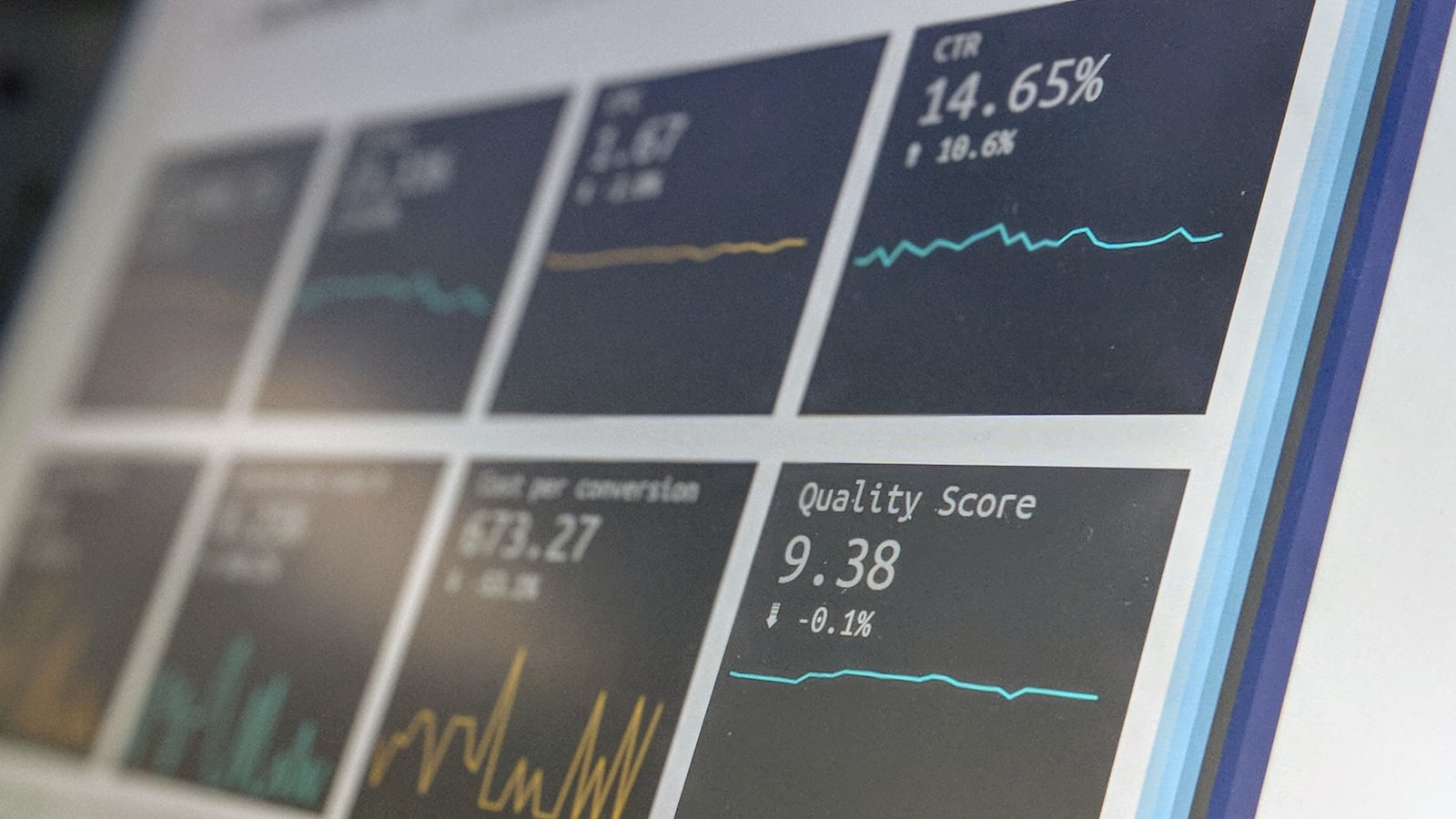
The first crucial step is understanding exactly where your tokens are going. Audit your current API dashboard to identify which applications, specific models, and internal endpoints consume the most resources. Look closely for hidden inefficiencies, such as overly verbose system prompts, redundant API calls, or looping scripts. Once you have a clear, data-driven picture of your monthly token volume, you can accurately forecast exactly how much capital you will save by switching to a discounted bulk provider.
Step 2: Integrate the Discounted API
Transitioning your systems to https://thetokenmart.com is engineered to be entirely seamless. Because TokenMart acts as a direct, unified gateway for OpenAI, Claude, and Gemini, integration requires changing just a few configuration settings rather than rewriting your core logic.
- Register for a dedicated commercial account at TokenMart to access bulk rates.
- Generate your unified, secure API key directly from your new administrator dashboard.
- Replace your standard model base URL with the TokenMart endpoint in your application's environment variables.
- Update your authentication headers to utilize your new discounted token key.
- Deploy the configuration update and instantly begin routing your live traffic through the discounted gateway.
This straightforward, plug-and-play approach ensures zero application downtime while immediately taking 15 percent off your open ai api cost.
Step 3: Monitor and Optimize Spending
After routing your production traffic through TokenMart, use our advanced analytics dashboard to monitor your new, highly optimized spend. Setting hard caps on daily token usage prevents unexpected financial spikes from runaway scripts, looping errors, or malicious bot traffic. Because you are now purchasing cheap GPT and Claude tokens in bulk, you will immediately notice a 15 percent reduction in your daily token burn rate. Monitoring it closely lets you reallocate those saved funds into customer acquisition.
5 Best Practices for Managing Open AI API Cost
While switching your endpoint to TokenMart provides an immediate 15 percent reduction in your open ai api cost, combining discounted tokens with smart software engineering practices maximizes your overall financial savings. Here are five proven, highly effective strategies for optimizing your AI expenses in 2026.
1. Utilize Semantic Caching
Semantic caching is defined as storing the specific responses to common user queries to avoid reprocessing them through the LLM. If user B asks a question that is semantically identical to a question user A just asked, your system can serve the cached answer instantly. This entirely eliminates the need to spend new prompt and completion tokens, which directly lowers your overall bill.
2. Implement Dynamic Model Routing
Not every single software task requires the absolute most expensive, heavy-duty language model available on the market. Dynamic routing relates to cost savings because it intelligent directs simple queries to cheaper, much faster models. Save your complex reasoning and coding tasks for the flagship models. TokenMart makes this incredibly easy by offering a unified API for multiple models, allowing you to route traffic intelligently on the fly.
3. Optimize and Compress Your Prompts
Prompt engineering is not just about improving output quality; it is a vital tool for controlling what you spend. Remove unnecessary conversational filler, redundant system instructions, and excessive background context from your prompts. Using clear, highly concise language directly reduces your input token volume. These small token reductions compound into massive financial savings when operating at an enterprise scale.
4. Leverage Fine-Tuning for Specialized Tasks
Instead of heavily stuffing thousands of tokens of context into a prompt every single time a user makes a request, consider fine-tuning a smaller, significantly cheaper model. Fine-tuning allows the model to learn your specific domain knowledge and formatting preferences upfront. While there is a minor initial training cost involved, the long-term reduction in prompt length will meaningfully cut your recurring spend.
5. Set Strict Max Token Limits
Always explicitly define a maximum token parameter in your outgoing API calls. This basic configuration acts as a critical safeguard against the model generating endlessly long, highly expensive responses due to a systemic hallucination or a vague, open-ended user prompt. Controlling your maximum output length is a foundational engineering practice for keeping your monthly billing predictable and protecting it from sudden, unexpected spikes.
Conclusion
Navigating the complex, rapidly evolving landscape of artificial intelligence infrastructure in 2026 demands a rigorous, highly strategic approach to expense management. Allowing your open ai api cost to spiral out of control is a direct, existential threat to your business's scalability and long-term profitability. By deeply understanding token economics, optimizing your system prompts, and utilizing dynamic model routing, you can successfully regain total control over your AI operational budget.
However, the single most impactful optimization you can execute today is completely abandoning standard retail pricing. https://thetokenmart.com provides the ultimate commercial solution, granting you immediate access to discounted bulk AI API tokens for GPT, Claude, Gemini, and more. Stop letting exorbitant retail API fees silently eat into your hard-earned profit margins.
Ready to take 15 percent off your open ai api cost? Onboard with TokenMart today, request a personalized technical demo, and start scaling your commercial AI applications on wholesale token pricing.
FAQ
- What is the average Open AI API cost for a commercial app?
- The average open ai api cost varies wildly based on daily user volume and specific model choice, often ranging from hundreds to tens of thousands of dollars monthly. Text-heavy applications like AI writing assistants or automated customer service bots consume millions of tokens daily. By utilizing a bulk provider like TokenMart, growing companies take 15 percent off these standard retail rates.
- How does TokenMart offer cheaper API tokens?
- TokenMart offers cheaper API tokens by purchasing raw compute and token volume in enterprise-level bulk from underlying providers like OpenAI, Google, and Anthropic. We then pass those wholesale discounts down to our users as a flat 15 percent off list. This volume-based arbitrage model allows startups and enterprises to access premium AI without paying the standard retail open ai api cost.
- Will changing my API base URL affect model quality?
- No, changing your API base URL to a provider like TokenMart will absolutely not affect your model quality. You are still accessing the exact same underlying Large Language Models. The only difference is the routing gateway, which is highly optimized to lower your open ai api cost while maintaining strictly identical response quality, speed, and factual accuracy.
- Why are completion tokens more expensive than prompt tokens?
- Completion tokens are more expensive because text generation requires significantly more computational power and memory bandwidth than simply reading static input text. Generating the next word in a sequence forces the model to calculate complex probabilities across its entire neural network. Actively managing your completion length is absolutely essential for controlling your overall open ai api cost.