OpenAI API Cost 2026: Cheap Pricing and Savings Guide

- TokenMart offers discounted bulk tokens at 15% off list, lowering your overall openai api cost compared to standard retail API providers.
- Upgrading to highly efficient models like GPT-4o-mini can slash your daily openai api cost by up to 80% without losing response quality.
- Utilizing batch API processing directly relates to reducing your openai api cost for non-urgent, repetitive data extraction tasks.
- Implementing strict token limit parameters acts as a primary defense against an inflated openai api cost in production environments.
Are you struggling to maintain profitability as your generative AI features scale in 2026? Unpredictable token usage can drain engineering budgets faster than most teams can track. As modern businesses integrate increasingly advanced language models, controlling your openai api cost has become a critical operational priority.
Understanding your openai api cost matters now more than ever before. While standard rates have evolved over the last year, unmanaged API requests still lead to severe budget overruns. This comprehensive guide will break down the exact openai api cost metrics for 2026, including detailed input, output, and caching rates.
More importantly, you will learn practical strategies to permanently optimize these expenses. By the end of this guide, you will discover how migrating your heavy workloads to TokenMart can secure cheap, bulk-rate pricing for all your favorite models. Let’s explore how you can maximize your application's artificial intelligence performance while aggressively minimizing your monthly openai api cost.
What is the OpenAI API Cost in 2026?
The openai api cost is defined as the total financial expense incurred by sending and receiving data through OpenAI's language models. It relies on a per-token billing system. You can think of a token as a small chunk of text, where 1,000 tokens generally equate to roughly 750 words.
In 2026, that baseline varies significantly depending on the specific model tier you choose. For existing legacy users, the standard GPT-4o openai api cost is grandfathered at $2.50 per 1 million input tokens and $10.00 per 1 million output tokens. Meanwhile, newer flagship models like GPT-5.4 carry a higher openai api cost.
Input vs. Output Tokens
To properly audit your spend, you must first distinguish between input and output metrics. Input tokens relate to the written prompts you send to the AI. Output tokens relate to the generated response the AI sends back to you. Output tokens invariably cost more because generating new text requires substantially more computational hardware power than merely reading it.
Cached Tokens and Multipliers
A major shift in the 2026 pricing structure is the introduction of advanced prompt caching. Cached tokens are defined as previously processed inputs that the system remembers. Reusing these tokens drastically lowers what you pay, often offering discounts of up to 90%. However, complex modalities like audio and vision introduce hidden multipliers that can suddenly inflate the bill if left unchecked.
The Bulk Discount Advantage
Paying list price directly to the primary provider can quickly drain small-to-medium enterprise budgets. This is exactly where TokenMart comes in. TokenMart serves as a specialized, centralized hub for bulk AI API access.
By purchasing tokens in wholesale quantities, TokenMart passes the saving on as a flat 15% discount. Your effective openai api cost drops by that much across the current lineup. Accessing LLMs through TokenMart is one reliable way to run enterprise-grade AI features at 15% under list.
Comparing the OpenAI API Cost Across Different Models
Analyzing your spend requires understanding the different model families available in 2026. The AI landscape is segmented into budget models, mid-tier workhorses, and premium frontier models. Your bill will fluctuate based on which tier handles your requests.
Budget and Mini Models
For routine tasks, the rates are incredibly cheap. Models like GPT-4o-mini offer an openai api cost of just $0.15 per million input tokens and $0.60 per million output tokens. This tier is perfect for text classification, sentiment analysis, and basic data extraction. Routing simple queries here protects your overall budget from unnecessary bloat.
Standard and Grandfathered Models
The mid-tier models balance high intelligence with a moderate price. As mentioned earlier, GPT-4o retains its legacy openai api cost for grandfathered accounts. This tier handles complex customer service chatbots, nuanced content writing, and standard coding tasks. It acts as the backbone for most commercial applications looking to stabilize spend.
Frontier and Reasoning Models
The most capable models carry the highest rates. The O1 and O3 reasoning models, alongside the GPT-5 family, are designed for deep logical processing and autonomous agent workflows. Because these models "think" before they output, your openai api cost reflects that heavy computational load. Restrict them to your most critical infrastructure to keep the total from skyrocketing.
Why Managing Your OpenAI API Cost Matters
Actively monitoring your openai api cost is not just an administrative accounting task. It is a fundamental pillar of sustainable software development. Unchecked spend can quickly outpace the subscription revenue generated by your application, transforming a profitable software tool into a financial liability.
Controlling it relates directly to business scalability. Predictable AI pricing allows you to confidently acquire new users without fear of bankruptcy. If the bill spikes unpredictably with every new user signup, scaling your commercial app becomes mathematically impossible.
Protecting Your Profit Margins
For modern startups, inference is often the highest recurring server expense. Reducing the average per-request price immediately improves your bottom line. By cutting your daily openai api cost by 15%, you can reallocate those saved funds into targeted marketing, product development, or new user acquisition.
Avoiding Unpredictable Spikes
Another critical reason tracking your openai api cost matters is the persistent threat of sudden traffic surges. A viral social media moment or a bot attack can send daily spend skyrocketing into the tens of thousands of dollars. A controlled spending framework ensures you are never caught off guard by an unexpected end-of-month invoice.
Leveraging Discount Providers
Ultimately, treating this as a flexible variable rather than a fixed tax is the key to corporate longevity. This is exactly where TokenMart earns its place. By shifting your API infrastructure to TokenMart, you insulate your business from standard retail pricing hikes. A structurally lower baseline rate means your product stays competitively priced in the open market.
How to Calculate and Lower Your OpenAI API Cost
Learning how to manually calculate your openai api cost is the first vital step toward reducing it. The strict mathematical formula for your openai api cost is defined as the sum of your input tokens multiplied by the input rate, plus your output tokens multiplied by the output rate.
Lowering your openai api cost requires a strategic mix of efficient prompting, intelligent model selection, and leveraging third-party wholesale providers. Follow this step-by-step practical guide to systematically lower your monthly openai api cost.
Step 1: Audit Your Current Context Length
Begin by analyzing your developer dashboard to identify which specific software features drive the highest openai api cost. Look closely for overly verbose system prompts, repetitive background tasks, or unnecessary data payloads. Stripping out useless background context from your prompts is the fastest way to lower the input side of your openai api cost.
Step 2: Implement Heavy Prompt Caching
Prompt caching directly impacts your openai api cost by storing frequently used input contexts in the provider's memory. When the system successfully reuses a cached prompt, the input openai api cost drops significantly for that specific request. This technique is exceptionally useful for chat applications that repeatedly send the exact same large documents to the AI.
Step 3: Match the Model to the Task
Not every single task requires the most expensive flagship model. Downgrading simpler tasks to GPT-4o-mini will instantly reduce your openai api cost by a massive margin. Reserving premium frontier models only for complex reasoning tasks optimizes your overall openai api cost without sacrificing the end-user experience.
Step 4: Switch to TokenMart
The absolute most effective strategy to permanently lower your openai api cost is to change your token provider entirely. Onboarding your system with TokenMart gives you the exact same models at 15% off list.
- Visit thetokenmart.com and request a personalized demo.
- Review the discounted bulk rates available for your preferred LLMs.
- Swap out your standard API keys and endpoints for TokenMart credentials.
- Watch your openai api cost settle 15% lower while response speeds stay identical.
5 Best Practices to Optimize Your OpenAI API Cost
Achieving the lowest possible openai api cost requires continuous codebase optimization. While TokenMart trims 15% off your baseline rate, optimizing your internal software ensures you never waste a single token. Implementing these five best practices will help you maintain a highly sustainable openai api cost architecture.
1. Set Strict Max Token Limits
Enforcing strict output parameter limits is a foundational defense against a runaway openai api cost. By capping the max_tokens parameter in your API calls, you physically prevent the language model from generating unnecessarily long-winded responses. This incredibly simple code adjustment ensures your output-related openai api cost remains highly predictable and cheap.
2. Utilize the Batch API for Non-Urgent Tasks
For offline data processing or non-time-sensitive workloads, leveraging asynchronous batch processing drastically cuts your openai api cost. Submitting your data in bulk for a 24-hour processing turnaround generally offers a flat 50% discount. Stacking batch processing on top of the 15% bulk discount compounds two separate savings.
3. Leverage Retrieval-Augmented Generation (RAG)
Instead of forcefully stuffing massive database documents into every single prompt—which artificially inflates your input openai api cost—you should utilize a RAG architecture. RAG searches your vector database for only the most highly relevant text snippets and sends only those small chunks to the model. This keeps your prompts beautifully concise, effectively slashing your input openai api cost.
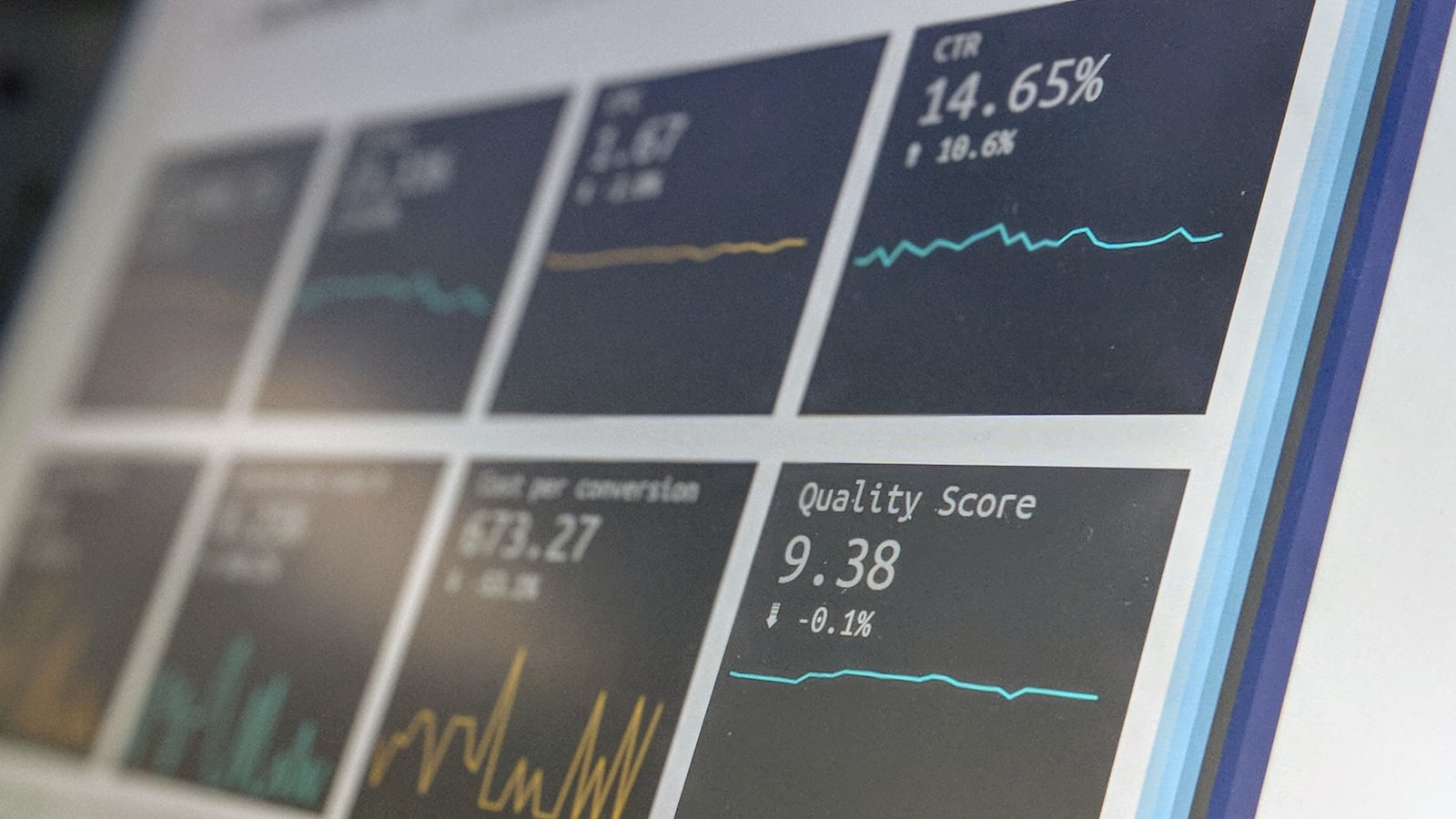
4. Monitor Usage with Advanced Analytics
You cannot realistically reduce an openai api cost that you do not actively measure. Use granular dashboard analytics to track your specific openai api cost per user, per feature, or per session. Identifying exceptionally heavy platform users allows you to confidently implement dynamic rate limiting, which fiercely safeguards your total openai api cost from abuse.
5. Partner with a Discounted Bulk Provider
The golden rule of openai api cost optimization is that you should never pay standard retail prices if you don't have to. TokenMart aggregates high-volume demand across thousands of commercial developers to secure a 15% wholesale discount. Routing your production traffic directly through TokenMart is defined as the smartest architectural choice for any commercial AI application intensely focused on minimizing its openai api cost.
Conclusion
Navigating the daily complexities of your openai api cost in 2026 does not have to be a frustrating, expensive guessing game. By clearly understanding the distinct differences between input and output tokens, intelligently leveraging prompt caching, and enforcing strict usage limits in your code, you can easily reign in your monthly openai api cost.
However, manual code optimization can only take your budget so far. The ultimate enterprise solution for a structurally lower openai api cost is migrating your traffic to a specialized wholesale provider.
Stop overpaying for standard retail AI pricing when better options exist. TokenMart gives commercial applications reliable, fast LLM token access at 15% below list. If you want to permanently slash your openai api cost while retaining full access to top-tier models like Claude, Gemini, and the GPT family, the transactional choice is clear. Visit thetokenmart.com today to request a software demo and start improving your AI profit margins.
FAQ
- What is the average OpenAI API cost per million tokens?
- Rates are quoted per million tokens rather than per thousand, and they depend on the model you select. GPT-4o bills $2.50 per million input tokens and $10.00 per million output tokens. Smaller models like GPT-4o-mini bill $0.15 per million input tokens and $0.60 per million output tokens.
- Why is my OpenAI API cost so high?
- Your openai api cost is likely high due to sending overly large system prompts or failing to restrict maximum output lengths in your code. Additionally, using a premium flagship model for simple text classification drastically inflates your openai api cost. Auditing your source code is the bigger lever; switching to a bulk provider like TokenMart takes a further 15% off the rate.
- How can I get cheaper OpenAI API pricing?
- The absolute fastest way to achieve a cheaper openai api cost is by transitioning your backend endpoints to TokenMart. Because TokenMart purchases API tokens in bulk, commercial developers pay 15% below the list rate. You can also utilize batch processing and prompt caching for further layered discounts.
- What is the difference between input and output tokens?
- Input tokens are defined as the instructional text you send to the model, while output tokens are defined as the generated text the model sends back. Output tokens always carry a noticeably higher openai api cost because generating predictive text requires substantially more cloud computing power. Monitoring both metrics is crucial for a perfectly accurate openai api cost calculation.
- How does TokenMart offer discounted LLM tokens?
- TokenMart achieves a much lower openai api cost by acting as a high-volume wholesale traffic aggregator. They purchase massive quantities of AI compute power up front, which reliably secures lower baseline rates. They then pass that on to customers as a flat 15% discount on the list rate for every current model.