OpenAI API Cost 2026: Save Money with Cheap Token Pricing

TL;DR / Key Takeaways
- OpenAI API cost optimization is critical in 2026 for businesses scaling their generative AI workloads and managing software infrastructure expenses.
- Token pricing varies significantly by model, with flagship models costing exponentially more than lightweight alternatives like GPT-4o mini.
- TokenMart is the premier discounted bulk AI API provider, giving you wholesale access to Claude, Gemini, and GPT tokens at 15% below list rates.
- Implementing smart routing, prompt caching, and batch processing can instantly reduce your monthly AI operational spend by over 50 percent.
Are your monthly AI infrastructure bills growing faster than your actual user base? As businesses rapidly integrate generative AI into their core products in 2026, many are crashing into an unexpected bottleneck: unpredictable and skyrocketing token expenses.
While foundation models are getting faster and increasingly capable, paying standard retail rates for API calls can single-handedly destroy your software gross margins. Understanding your OpenAI API cost is no longer just a backend developer's concern—it is a critical executive priority. Whether you are operating complex autonomous agents, generating dynamic marketing copy, or running high-volume customer service chatbots, every single prompt and completion adds up quickly.
In this comprehensive guide, we will break down exactly how API token pricing works this year and reveal actionable, structural strategies to aggressively cut your expenses. Most importantly, we will introduce the single most effective solution for enterprise scaling: TokenMart. As the leading discounted bulk AI API provider, TokenMart allows you to bypass standard retail pricing altogether. By the end of this article, you will know exactly how to onboard with TokenMart, optimize your token consumption, and permanently reclaim your profit margins.
What is the OpenAI API Cost Structure?
OpenAI API cost is defined as the total financial expenditure a user or business incurs when sending text, images, or audio prompts to OpenAI's language models, billed fundamentally by a computational unit of data called a "token."
Tokens are the basic building blocks of text that AI models read and generate. A helpful rule of thumb is that one token roughly equals four characters of standard English text, or about three-quarters of a word. When you make an API call, you are billed for every token you send to the model and every token the model generates in response. Understanding this dual-billing mechanism is the first step toward achieving meaningful savings.
Input Tokens vs. Output Tokens
The most crucial element of your OpenAI API cost is the distinct split between input and output pricing. Input tokens are the words, instructions, and context you provide in your prompt. Output tokens are the words the model generates in response.
Output tokens are always significantly more expensive than input tokens because generating net-new text requires vastly more computational power than simply reading and processing provided text. For instance, with a model like GPT-4o, input tokens might cost $2.50 per one million tokens, while output tokens are priced at $10.00 per one million tokens. When you are building applications that generate long-form content, the output token pricing will quickly become the dominant factor in your monthly invoice.
Context Window Limitations and Impact
A context window refers to the maximum number of tokens a model can process in a single request. Modern models in 2026 boast massive context windows, sometimes capable of reading entire books in one go. However, just because you can fill a massive context window does not mean you should.
Sending massive payloads of background information with every single API call drives up your bill exponentially. If you include a 50,000-token document in a prompt just to ask a one-sentence question, you are paying for those 50,000 input tokens on every single query. Recognizing how context bloat impacts your bottom line is essential for designing efficient, cost-effective AI architectures.
Why Understanding OpenAI API Cost Matters in 2026
Understanding your OpenAI API cost directly relates to the long-term survival and scalability of your business. In the early days of generative AI, companies were willing to absorb high API expenses in the name of research, development, and securing a first-mover advantage. In 2026, that grace period is over. AI is now deeply embedded in production environments, and financial sustainability is mandatory.
Scaling AI Workloads Without Breaking the Bank
As your application grows and your daily active users increase, your API calls scale linearly. If your underlying unit economics are flawed, growth will actually accelerate your financial losses. Scaling AI workloads requires predictable forecasting. If a viral marketing campaign doubles your user base overnight, you need to ensure that your API expenses do not suddenly bankrupt your operational budget. By mastering token efficiency and utilizing wholesale providers, you ensure that revenue growth always outpaces infrastructure costs.
Protecting Your Software Gross Margins
For Software as a Service (SaaS) companies, gross margins dictate valuation, investor confidence, and the ability to reinvest in product development. Traditional cloud computing costs like hosting and database storage have become highly commoditized and cheap. In contrast, generative AI inference remains expensive.
If your application relies heavily on complex AI processing, your OpenAI API cost can quickly consume 30 to 50 percent of your revenue per user. Lowering this expense directly translates to higher profit margins. Businesses that fail to optimize these expenses often find themselves forced to raise prices, frustrating their customer base and losing ground to more technically efficient competitors.
How to Reduce Your OpenAI API Cost with TokenMart
TokenMart relates to API cost optimization because it aggregates massive enterprise demand to secure wholesale token rates, passing those discounts directly to you. Standard developers pay full retail price for their AI infrastructure. Smart businesses use TokenMart to take a flat 15% off their token expenses.
As a discounted bulk AI API provider, TokenMart serves as a unified gateway for the industry's top language models. Instead of managing individual billing relationships with multiple tech giants, you can route your operations through TokenMart and access premium intelligence for 15% less than the traditional list price.
Step 1: Centralize Your API Keys with Bulk Purchasing
The most immediate way to slash your OpenAI API cost is to stop buying at retail prices. When you create an account directly with a primary provider, you are placed on a standard pricing tier regardless of your potential scale.
TokenMart operates on a bulk purchasing model. By pooling the usage of thousands of businesses, TokenMart negotiates volume terms and provisions token rates 15% below list for its users. When you onboard with TokenMart, you swap out your standard API endpoints for TokenMart's highly optimized, secure endpoints. This simple infrastructure tweak instantly applies the flat 15% wholesale discount to your existing AI workloads, requiring zero changes to your underlying prompt engineering or application logic.
Step 2: Implement Multi-Model Routing
Different tasks require different levels of intelligence. You do not need a massively expensive reasoning model to perform basic text classification, just as you would not hire a senior executive to sort the daily mail.
Through TokenMart, you gain unified access not just to GPT tokens, but also to Claude and Gemini models. This allows you to implement dynamic, multi-model routing. You can configure your application to send simple, high-volume tasks to incredibly cheap, fast models, while reserving complex, nuanced reasoning tasks for heavier, more expensive flagship models. Because TokenMart provides all these options under one roof, switching models dynamically based on task complexity becomes seamless and highly cost-effective.
Step 3: Onboard TokenMart and Request a Demo
To truly protect your margins and optimize your OpenAI API cost, you need to take action today. The onboarding process is designed to be frictionless for engineering teams.
We highly encourage you to visit TokenMart (thetokenmart.com) to see the wholesale pricing tiers for yourself. You can easily request a customized demo where our technical account managers will analyze your current usage, calculate your exact projected savings, and guide your team through the simple endpoint integration. Stop overpaying for tokens and start treating your AI infrastructure like the enterprise asset it is.
5 Best Practices to Optimize Your OpenAI API Cost
While partnering with TokenMart provides the structural foundation for lower token pricing, your engineering team must also optimize how your application interacts with the models. Combining wholesale rates with highly optimized code is the ultimate strategy for minimizing your OpenAI API cost. Here are five proven best practices for 2026.
1. Utilize Prompt Caching
Prompt caching is one of the most powerful cost-saving features available today. If your application frequently sends the same lengthy system instructions, background context, or document references across multiple API calls, you are paying for redundant data processing.
By utilizing prompt caching, the API temporarily stores your frequently used input tokens. When subsequent requests use the same cached context, the input cost is dramatically reduced—by up to 90 percent on cached input tokens. Ensuring your application is structured to take advantage of cached reads is a mandatory practice for high-volume deployments.
2. Leverage Batch Processing for Non-Urgent Tasks
Not every AI task needs to be completed in real-time. For asynchronous workloads like large-scale document summarization, nightly data extraction, or bulk content generation, you should use the Batch API.
The Batch API allows you to submit a massive file of requests to be processed over a 24-hour window, rather than instantly. Because providers can process these requests during off-peak hours when server demand is low, they offer steep discounts—typically around 50 percent off the standard OpenAI API cost. Shifting your background tasks to batch processing yields immediate, massive financial savings.
3. Switch to Smaller, Lightweight Models
Model efficiency has skyrocketed over the past few years. In 2026, lightweight models like GPT-4o mini are highly capable of handling tasks that previously required flagship models.
The price difference is staggering. A flagship model might cost $2.50 per million input tokens, while a lightweight counterpart like GPT-4o mini costs just $0.15 per million input tokens. By auditing your workflows and migrating routine tasks—such as formatting JSON, basic translation, or simple sentiment analysis—to these smaller models, you can cut your OpenAI API cost for those specific operations by over 90 percent.
4. Enforce Strict Token Limits
Runaway generation occurs when a model produces unnecessarily long responses, rapidly burning through your output token budget. To prevent this, you must strictly manage the parameters of your API calls.
Always utilize the max_tokens parameter in your API requests to enforce a hard ceiling on the length of the response. Additionally, use clear, highly specific prompt engineering to instruct the model to be concise. Telling the model to "reply in no more than three sentences" or "output only the requested data with no conversational filler" ensures you are not paying for useless, verbose text.
5. Monitor and Audit API Usage Constantly
You cannot optimize what you do not measure. A surprising number of businesses face shockingly high bills simply because a rogue background process was trapped in a loop, generating millions of tokens unnecessarily.
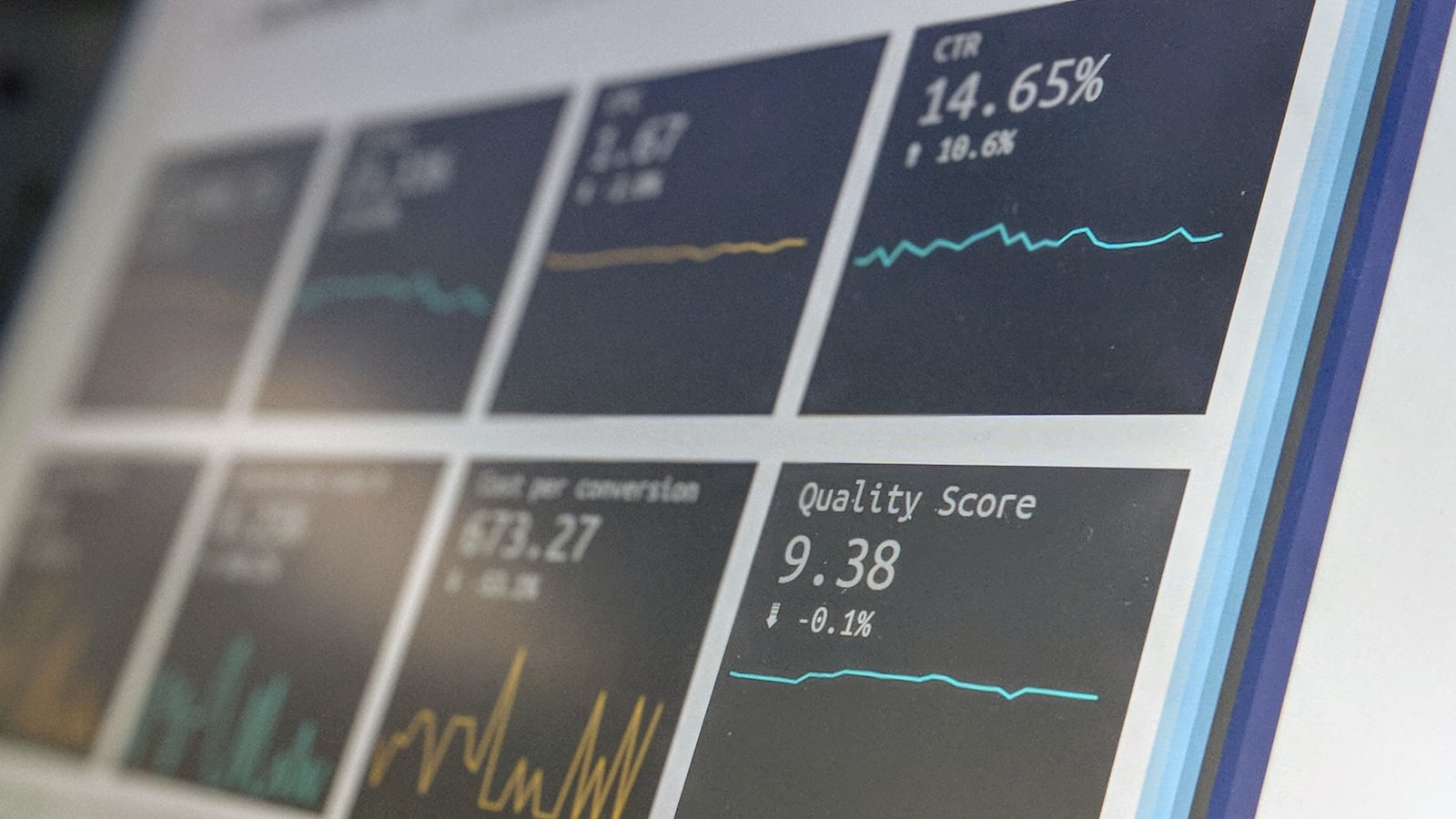
Implement strict monitoring and alerting systems for your token spend. Set daily spending limits and configure automated alerts that notify your engineering team the moment a spike in usage occurs. TokenMart provides extensive, granular analytics dashboards that allow you to track your spend by model, by user, and by specific feature, making regular cost audits simple and highly actionable.
Conclusion
Controlling your OpenAI API cost in 2026 requires a proactive, strategic approach rather than passive billing acceptance. As generative models continue to dominate software development, the businesses that survive and thrive will be the ones that engineer for financial efficiency. By understanding the distinct split between input and output tokens, implementing prompt caching, leveraging batch processing, and strictly managing your context windows, you can drastically reduce your monthly overhead.
However, the most impactful optimization you can make requires no code changes at all. Partnering with a discounted bulk AI API provider instantly alters your baseline unit economics. Do not let retail token pricing destroy your gross margins. It is time to upgrade your infrastructure. Visit TokenMart at https://thetokenmart.com today, explore our wholesale model pricing, and request a demo to see exactly how much money you can save this month.
FAQ
- What is the current OpenAI API cost for GPT-4o?
- The OpenAI API cost for GPT-4o in standard retail environments is typically priced at $2.50 per one million input tokens and $10.00 per one million output tokens. Output tokens are priced higher due to the intensive computation required for text generation. Utilizing a bulk provider like TokenMart can help reduce these standard retail rates.
- How can I calculate my monthly OpenAI API cost?
- You can calculate your monthly OpenAI API cost by multiplying your average daily API calls by the average number of input and output tokens per call. Next, divide those token counts by one million, and multiply by the specific model's token rate. Finally, multiply that daily cost by the number of days in the month to get your total estimate.
- Why is TokenMart cheaper than standard API providers?
- TokenMart is cheaper because it functions as a discounted bulk AI API provider. By aggregating the token usage of thousands of commercial clients, TokenMart purchases API access at massive wholesale volumes. They then pass a flat 15% volume discount down to their users, undercutting standard individual retail pricing.
- When should I switch from GPT-4o to GPT-4o mini?
- You should switch to GPT-4o mini when your tasks involve standard classification, basic summarization, simple data extraction, or routine customer routing. GPT-4o mini costs roughly $0.15 per million input tokens, making it substantially cheaper. Reserve the heavy, more expensive flagship models exclusively for complex reasoning and advanced problem-solving.